
Turkish Mom Simulator: ten loving, funny family moments
Someone says they are not hungry. It is 24°C and they are heading out the door. A stranger just complimented the baby. What do you do? Ten everyday situations, a family-warmth score out of 30, and a result you can send to the person who raised you.
A warm, affectionate joke made with love for families with Turkish roots. “Anne” (mom) is a role here, not a gender: parents, grandparents, aunts, uncles and anyone who feeds, worries and fusses lovingly can play. Every family is different, and that is part of the fun.
What would you do?
Ten everyday moments. Pick what you would really do. There are no right or wrong answers: the more fuss, the more family warmth. We also count plates offered, cardigans offered and glasses of çay poured.
Just for fun. Nothing you pick is saved or sent anywhere.
Result
Just for fun: a joke score, not a judgment. Every family has its own habits.
What is the Turkish Mom Simulator?
A two-minute, lovingly exaggerated game about the Turkish anne: the person who asks “yemek yedin mi?” (“did you eat?”) before hello, who is sure a cold draft is up to no good, who packs food for a 25-minute drive and who says maşallah over a baby before a stranger has finished the sentence. Ten situations, three answers each. Your total tells you whether you are just getting started, a Teyze in Training, a Certified Turkish Anne or an Efsane Anneanne (a legendary grandma).
It was made for families with Turkish roots living far from Türkiye, who grew up with these lines and now catch themselves saying them to their own kids in English. If you have ever heard yourself say “take a jacket” on a warm day, this page is for you.
The four levels
| Score | Title | Field signs |
|---|---|---|
| 0–9 | Just Getting Started | Takes “I’m not hungry” as information. Owns one cardigan and wears it themself. |
| 10–17 | Teyze in Training | Puts out nuts before guests arrive. Has said “just try a little” with a very small spoon. |
| 18–24 | Certified Turkish Anne | The çay is always ready. A small blue bead somewhere in the car. Food packed for every goodbye. |
| 25–30 | Efsane Anneanne | Hears a sneeze through two walls. Has fed someone they met today. Ends phone calls many times and never quite hangs up. |
24 things Turkish families say, with translations
An unofficial family phrasebook. Each entry has the Turkish, the word-for-word English and what it really means. Search by a word in either language.
Caring
Yemek yedin mi?
Word for word: “Did you eat?”
Often the first question on a phone call. It is less about food and more about “I care about you”.
Aç mısın?
Word for word: “Are you hungry?”
Asked whenever someone walks in the door, whatever the time.
Biraz daha ister misin?
Word for word: “Would you like a little more?”
Said just after you finish a full plate. The answer is usually “no, thank you”, and then you get a little more.
Çay koyayım mı?
Word for word: “Shall I pour you some tea?”
A question that is mostly an announcement: the tea is already on its way.
Hırkanı al.
Word for word: “Take your cardigan.”
Valid at almost any temperature. The cardigan is a love language.
Üşütme kendini.
Word for word: “Don’t catch a cold.”
Said with a worried look at anyone who is not wearing socks.
Cereyanda oturma.
Word for word: “Don’t sit in the draft.”
Many families believe a cold draft (cereyan) can make you ill. It is a folk belief, and a big part of the humor.
Yalınayak gezme.
Word for word: “Don’t walk around barefoot.”
Terlik (house slippers), please.
Kendine iyi bak.
Word for word: “Take good care of yourself.”
A warm goodbye that works for everyone.
Eve varınca ara.
Word for word: “Call me when you get home.”
Because the worrying stops only after the phone rings.
Yolun açık olsun.
Word for word: “May your road be open.”
A wish for a safe, smooth journey.
Food
Yolluk hazırladım.
Word for word: “I prepared food for the road.”
The road is 25 minutes. The food could feed a small village.
Manners and welcome
Eline sağlık.
Word for word: “Health to your hand.”
What you say to whoever cooked. It is basically mandatory.
Afiyet olsun.
Word for word: “May it be for your health.”
Said before, during and after a meal. The reply is “sana da”.
Kolonya ister misin?
Word for word: “Would you like some cologne?”
Lemon cologne (kolonya) poured into your palms: a welcome to guests, and a refresher after a meal.
Ayakkabılarını çıkar.
Word for word: “Take your shoes off.”
Said at the door, usually right after hello.
Odadan çıkarken ışığı kapat.
Word for word: “Turn the light off when you leave the room.”
Said in every language, and with extra passion in many families.
Güle güle kullan.
Word for word: “Use it with smiles.”
Said when someone gets something new: enjoy it.
Good wishes
Maşallah, nazar değmesin.
Word for word: “What God has willed, may the evil eye not touch it.”
A phrase of admiration, often said over babies and children. Said with love, and usually with a smile.
Tü tü tü.
Word for word: “(a playful “spit” sound, three times)”
A light-hearted sound some people make after a compliment or good news, a bit like knocking on wood.
Phone and stories
Hadi kapatalım.
Word for word: “Let’s hang up.”
Marks the middle of a phone call, not the end.
Ben senin yaşındayken…
Word for word: “When I was your age…”
The start of a story from the old days. Grab a snack.
Terms of endearment
Canım, ciğerim.
Word for word: “My dear, my liver.”
“Ciğerim” (my liver) is a term of endearment, like “sweetheart”.
Oğlum / kızım.
Word for word: “My son / my daughter.”
Said to actual children, their friends, neighbors and sometimes the delivery person. It is a term of affection.
Why the cardigan? A short cultural note
Many Turkish families believe that a cold draft (cereyan) or cold feet can make you ill. It is a folk belief rather than medical advice, and it is a favorite subject of family jokes. Add a culture where feeding guests is a way of showing respect (misafirperverlik, hospitality) and the old custom of wishing someone well with nazar değmesin, and you get three habits many people recognize: warmth, food and good wishes. The game exaggerates them; the love behind them is real.
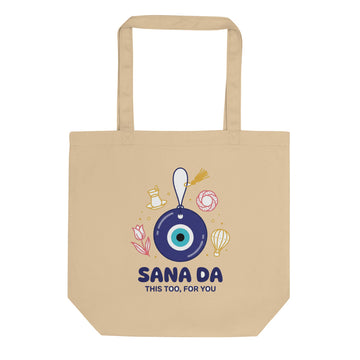
For the person who always has the çay ready
Everyday things with the words many families already say, in Roots & Talks designs.


More free Turkish culture games
No app and no sign-up. Pick another one.
Questions people ask
What is the Turkish Mom Simulator?
A free, affectionate browser game with ten everyday family moments. You choose what you would do and get a family-warmth score out of 30, plus silly stats like plates offered and cardigans offered. It takes about two minutes and works on phones.
Is the game making fun of Turkish mothers?
No. It is a warm joke about loving habits that many families recognize: offering seconds, bringing a cardigan, saying maşallah, the long goodbye on the phone. Families are all different and no answer is right or wrong.
Can dads, grandparents and others play?
Yes. “Anne” is a role in this game, not a gender. Anyone who feeds, worries and fusses lovingly can score high.
How is the score calculated?
Each of the ten moments has three answers worth 0 to 3 points of family warmth. The total, out of 30, decides your title. It is a joke score, not a judgment of anyone.
What does “yemek yedin mi” mean?
Literally “did you eat?”. In many Turkish families it is a way to say hello and “I care about you” in one breath.
What is cereyan?
Cereyan means a draft, a current of cold air. Many families say that sitting in one gives you a cold or a stiff neck. It is a folk belief, not medical advice, and a favorite subject of family humor.
Is my result saved or sent anywhere?
Your best score stays in your own browser. The game does not upload anything. The share buttons only open your own apps when you tap them.